Upper Shell Examines How Intelligent Manufacturing Is Changing LTCC and MLCC Production
WENZHOU, ZHEJIANG, CHINA, September 18, 2026 /EINPresswire.com/ -- As electronic devices continue to demand greater
Press Release Disclaimer: This is a press release distributed through the XPR Media network. It has not been independently verified by our newsroom.

WENZHOU, ZHEJIANG, CHINA, September 18, 2026 /EINPresswire.com/ — As electronic devices continue to demand greater miniaturization, precision, and reliability, the manufacturing processes behind advanced ceramic components are also undergoing significant changes. Intelligent manufacturing is becoming an increasingly important part of this transition, particularly in the Low Temperature Co-fired Ceramic (LTCC) and Multilayer Ceramic Capacitor (MLCC) industries. Upper Shell, a high-tech enterprise specializing in ceramic manufacturing equipment and advanced materials, is examining how automation, digital control, and data-driven production are changing these manufacturing environments.
Based in Wenzhou, China, Upper Shell operates three modern manufacturing facilities and has more than 20 years of equipment manufacturing experience. With more than 400 employees, the company combines ceramic engineering, precision machining, research and development, and intelligent automation to provide production-line solutions for electronic ceramic manufacturers.
Intelligent Manufacturing Moves Beyond Individual Machines
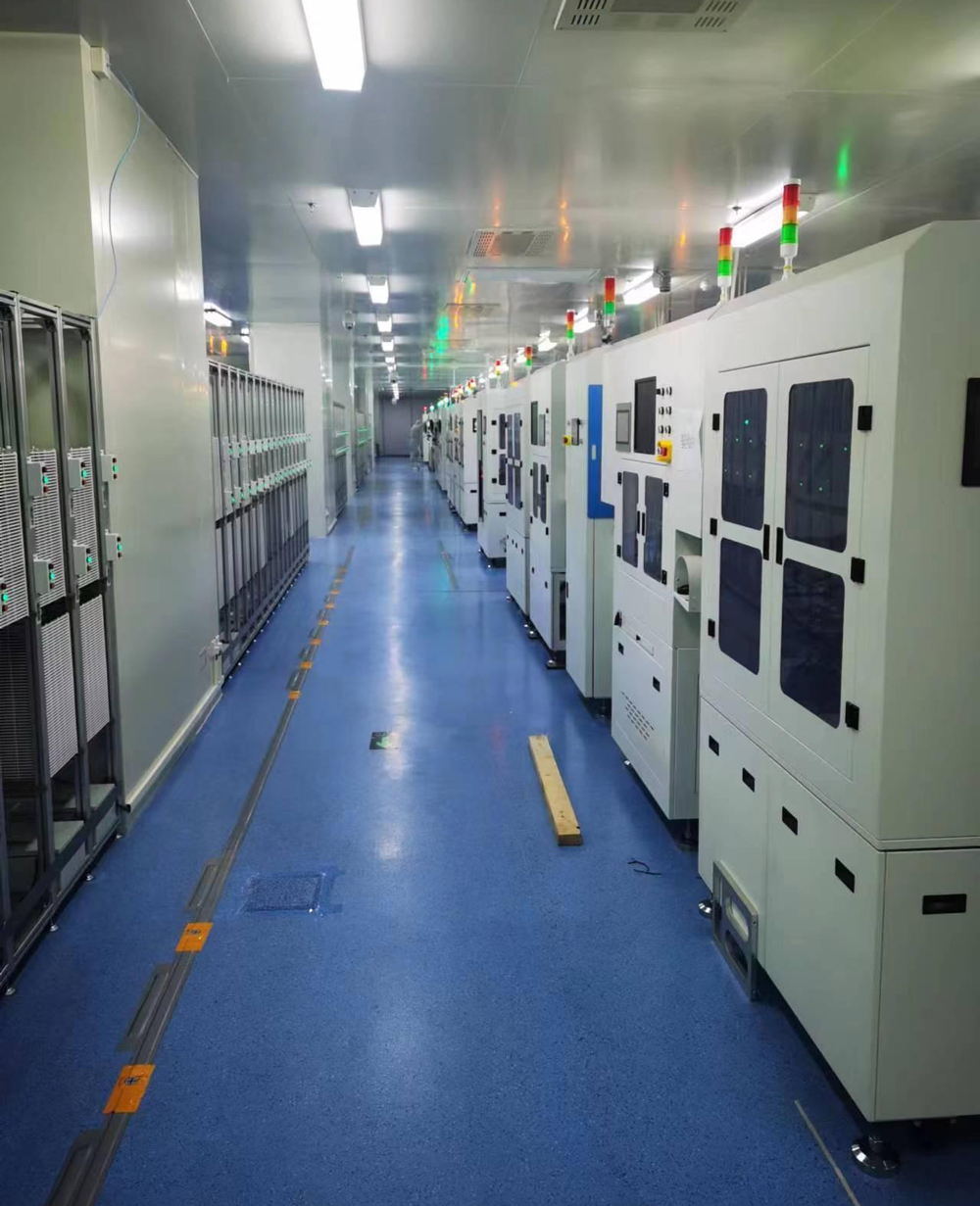
The development of intelligent manufacturing is changing how ceramic production lines are designed and operated. Rather than relying only on individual machines, modern production systems increasingly connect equipment, process control, digital monitoring, and production data into an integrated manufacturing environment.
Upper Shell develops turnkey smart production lines covering equipment configuration, process optimization, digital monitoring, and MES-based automation control. This approach is designed to support production environments where equipment and processes can operate with greater consistency and traceability.
Robotics, AI-assisted manufacturing, and real-time data analytics are also becoming part of this manufacturing model. These technologies can help manufacturers monitor production conditions, identify variations, and improve operational efficiency. For industries where dimensional accuracy and process stability are critical, these capabilities can become important elements of production planning.
LTCC Production Requires Precision Across Multiple Stages
LTCC manufacturing involves a sequence of processes that require controlled material preparation and accurate layer processing. Upper Shell’s LTCC production solutions cover stages including slurry preparation, tape casting, tape blanking, via punching, via filling, conductor printing, stacking, laminating, and cutting.
The company’s LTCC equipment portfolio includes tape casting machines, screen printing lines, stacking machines, punching machines, ball mills, vacuum deaerator tanks, and other production equipment. Its high-precision tape casting equipment, for example, is designed for producing uniform ceramic green tapes, while automated stacking equipment supports multilayer structures with controlled alignment.
Automation can be particularly relevant in these processes because variations in material preparation, layer positioning, printing, or stacking can affect subsequent manufacturing stages. By integrating equipment and process monitoring, manufacturers can establish more consistent production conditions while reducing the need for manual intervention.
Upper Shell’s LTCC solutions are intended for applications including RF and microwave components, automotive electronics, medical devices, 5G communication systems, aerospace electronics, IoT and sensor modules, power electronics, and LED packaging.
MLCC Manufacturing Places Greater Emphasis on Process Integration
MLCC production involves an even broader sequence of precision manufacturing operations, from ceramic material preparation and tape casting to printing, stacking, lamination, cutting, binder burnout, sintering, termination, electroplating, inspection, and packaging. Upper Shell provides equipment covering these stages as part of its full-process MLCC manufacturing solutions.
Among the company’s MLCC equipment are ultra-thin tape casting machines, roll-to-roll stacking machines, warm isostatic presses, four-parameter testing machines, precision grinding equipment, and vacuum deaerator tanks. The MLCC product portfolio also includes equipment for slitting, edge trimming, sintering, chamfering, termination, electroplating, visual inspection, and taping and packaging.
The integration of these processes reflects a broader movement toward automated and data-supported production. For example, Upper Shell’s MLCC four-parameter testing equipment is designed to measure capacitance, dissipation factor, insulation resistance, and breakdown voltage while supporting automated sorting and data recording. Such capabilities can connect quality inspection more closely with production data and process management.
Digital Control Supports Production Consistency
One of the key changes associated with intelligent manufacturing is the growing emphasis on real-time process information. Instead of evaluating production performance only after a batch has been completed, manufacturers can use sensors, monitoring systems, and production data to observe operating conditions throughout the process.
For ceramic manufacturing, this can be particularly valuable because processes such as tape casting, printing, stacking, lamination, and sintering require controlled parameters. Upper Shell’s approach combines equipment automation with digital monitoring and data-driven process optimization, with the aim of improving productivity while reducing production variability.
This development also supports the concept of “lights-out” manufacturing, where production systems can operate with a high degree of automation and limited manual intervention. Upper Shell states that its LTCC solutions are designed to support stable, fully unmanned production environments, while its broader intelligent factory solutions focus on efficiency, process control, and long-term operational stability.
R&D Becomes Increasingly Important to Equipment Development
As ceramic components become increasingly integrated into advanced electronics, manufacturing equipment must adapt to changing requirements for precision and process control. This makes equipment development closely connected with research and development in materials, automation, and process engineering.
Upper Shell identifies intelligent control systems, high-precision coating mechanisms, data-driven process optimization, and advanced materials as areas of its R&D focus. Its MLCC manufacturing operations also highlight ISO 9001 and ISO 14001 certification, more than 40 intellectual property rights, and a 20,000-square-meter manufacturing facility.
The company’s broader manufacturing strategy combines equipment development with technical support and customized production solutions. For global manufacturers, this can be relevant when production lines need to accommodate specific materials, product dimensions, automation requirements, or output targets.
Intelligent Manufacturing and the Next Stage of Ceramic Production
The evolution of LTCC and MLCC manufacturing illustrates a broader shift in electronic component production. As manufacturers seek greater precision, productivity, traceability, and process stability, intelligent production systems are becoming increasingly integrated into equipment and factory design.
Upper Shell’s focus on complete production lines, advanced materials, automation, AI-assisted manufacturing, robotics, and real-time data analytics reflects this changing manufacturing environment. Its LTCC and MLCC solutions cover multiple stages from material preparation to inspection and packaging, providing an integrated approach to ceramic production.
As the electronics industry continues to evolve, the relationship between manufacturing equipment, process engineering, and digital technologies is expected to remain an important consideration for ceramic component producers. For LTCC and MLCC manufacturers, the transition toward intelligent production is not limited to adding automation to individual machines; it increasingly involves connecting equipment, processes, data, and quality management into a coordinated manufacturing system.
For more information about Upper Shell’s intelligent ceramic manufacturing solutions, LTCC production lines, MLCC production equipment, and advanced materials, visit the official website: https://www.uppershell.com/
Upper Shell
Upper Shell
+ +86 19519312060
Daniel.Pan@UpperShell.com
Legal Disclaimer:
EIN Presswire provides this news content “as is” without warranty of any kind. We do not accept any responsibility or liability
for the accuracy, content, images, videos, licenses, completeness, legality, or reliability of the information contained in this
article. If you have any complaints or copyright issues related to this article, kindly contact the author above.

Media gallery