Stepping-Stone Jobs, Hands-On Experience, Independent Learning, & More: Cengage 2026 Employability Report Shows How Employer Expectations Are Reshaping Career Readiness
77% of graduates believe employers expect more experience than an entry-level candidate should reasonably have 53%
Press Release Disclaimer: This is a press release distributed through the XPR Media network. It has not been independently verified by our newsroom.


New data from Cengage’s 2026 Graduate Employability Report finds the connection between education and employment is changing as rising employer expectations redefine what it means to be career-ready.
This press release features multimedia. View the full release here: https://www.businesswire.com/news/home/20260923581345/en/
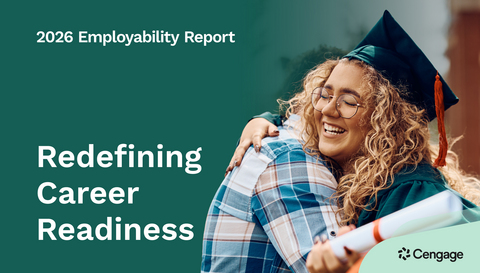
Now in its sixth year, the report draws on insights from recent graduates, educators, and employers, providing a full view of the transition from education to the workforce. More than half (53%) of graduates chose not to apply for entry-level jobs (in industries like computing and STEM) because they felt underqualified, and 77% believe employers expect more experience than an entry-level candidate should reasonably have. Educators are navigating these changes as well, with 62% of instructors saying they have had to do more in recent years to prepare students for entry-level employment.
“The growing misalignment around career readiness is complicating the transition for graduates entering the workforce,” said Michael Hansen, Cengage CEO. “Graduates are being asked to enter the workforce with experience, job-specific skills, and readiness from day one. Rather than placing the responsibility on any one group to create career-ready workers, we have an opportunity for employers, educators, and institutions to align around what career readiness requires and how each can contribute to helping graduates achieve it.”
Experience Is the New Currency of Employability
Three-quarters (75%) of graduates believe there are too few true entry-level opportunities, and 64% say the qualifications listed in entry-level job postings exceed what should reasonably be expected. Lack of work experience (32%) continues to be a barrier, prompting nearly half (49%) of graduates still seeking relevant employment to consider a “stepping-stone” role to get their foot in the door.
Experience emerged as a key differentiator for graduates who successfully landed entry-level roles. Among employed graduates who held an internship, 81% say the opportunity helped them secure their jobs, and more than half (52%) say it helped a lot. When asked to identify the single biggest contributor to securing employment, graduates ranked internships or prior work experience first (24%), ahead of a college degree (14%).
As the entry-level job market becomes harder to navigate, graduates are also reassessing what they need from their education and how to continue building career readiness.
- 37% believe their education was worth the cost, down significantly from 68% in the inaugural 2022 report.
- 56% want colleges to provide more internships, co-ops, and paid work experiences.
- 84% plan to pursue additional learning or skills training after graduation, with career advancement, professional development, higher earning potential, and long-term job security among their top motivations.
Career Readiness Is a Shared Priority Without a Shared Strategy
The report shows that graduates, educators, and employers agree that career readiness matters, but differ on who should be responsible for preparing graduates for work. Most employers (70%) believe students themselves hold the primary responsibility to prepare for the workforce, while 40% of graduates believe education providers should be accountable for helping them secure employment.
Those differences come as employers themselves are rethinking what signals career readiness. When evaluating entry-level candidates, employers say the main factors they prioritized were job-specific skills (41%), real-world experience (22%), relevant skills training or certifications (21%), and college degrees (16%). Yet, degrees remain deeply embedded in hiring practices. Sixty-one percent of employers still require an associate or bachelor’s degree for entry-level positions, and 52% believe degrees demonstrate professionalism and workplace readiness.
“Looking at career readiness from the perspective of graduates, educators, and employers helps us pinpoint where expectations begin to diverge as students transition from education to employment,” said Kim Russell, Senior Vice President of Research, User Experience, and Design at Cengage. “While all three groups recognize the importance of career readiness, they don’t always agree on the skills and experiences graduates need, where that preparation should happen, or who should be responsible for it. Identifying those disconnects is critical to creating a more aligned path from education to the workforce.”
Creating New Paths to Career Readiness
Graduates are taking an active role in building career readiness. Nearly two-thirds (63%) are pursuing or plan to pursue graduate or professional education.
They’re also building emerging skills independently. Sixty-one percent say they have sufficient artificial intelligence (AI) skills for the jobs they applied for, up from 51% in 2025; yet 64% say they learned most of their AI skills independently, instead of through their degree pathways.
That independence comes amid broader questions about where responsibility for career readiness should sit, with educators assuming a greater sense of ownership for workforce preparation. While 42% of instructors identify themselves as primarily responsible for preparing students for the workforce, only 19% of employers say the same about themselves.
“It is important to understand that we all share a common goal: ensuring graduates can successfully transition into the workforce as capable, skilled employees,” said Hansen. “Getting there will require all of us to move beyond familiar ways of working and rethink the roles we play in preparing students for what comes next. Graduates are already adapting to a changing workforce, but they cannot close the career readiness gap alone. Educators and employers have an opportunity to provide greater clarity on the experiences and skills that matter most today while creating meaningful opportunities for students to develop and apply them before entering the workforce.”
Learn more about the state of employability in the full report here.
About Cengage
Cengage, a global edtech company, supports learners, educators, and institutions across more than 100 countries. With products serving nearly 16 million digital users across the Higher Education, School, Work, and English Language Learning markets, we’ve built a learning ecosystem that connects education to employment. We combine trusted content, AI-powered insights, and scalable digital platforms to power learning for every future and drive meaningful outcomes at every stage of the learning journey. Visit us at www.cengagegroup.com, or find us on LinkedIn or X.
View source version on businesswire.com: https://www.businesswire.com/news/home/20260923581345/en/
Media gallery